
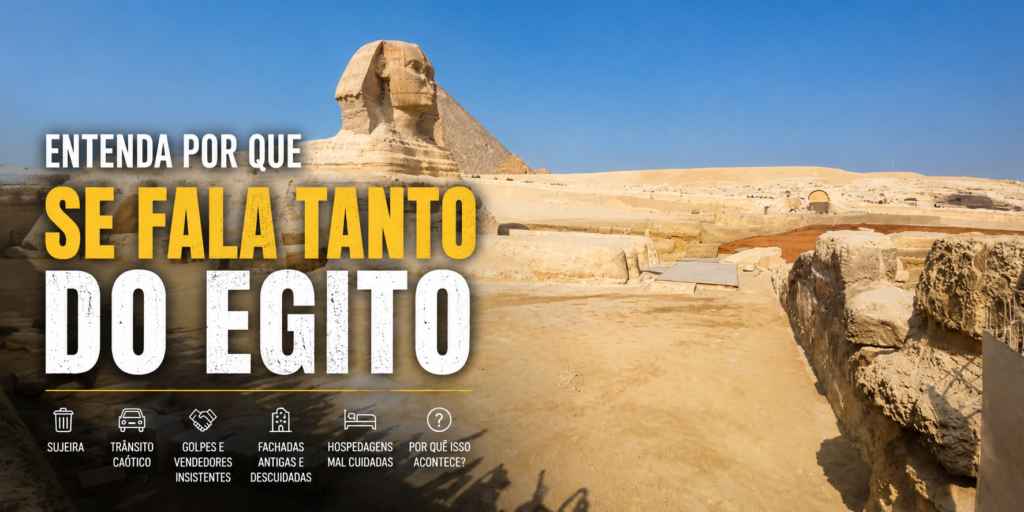
The Main Problems Tourists Complain About When Visiting Egypt: Understanding the Reality of the Country
Anyone researching Egypt online will find very different opinions. While some tourists describe the trip as an unforgettable experience, others report challenges related to cleanliness, persistent street vendors, chaotic traffic, and the contrast between the country's historic monuments and the everyday reality of its cities.
But is Egypt really as problematic as some reviews and online comments suggest?
The answer is more complex than it seems. Many of the complaints made by tourists stem from cultural, economic, and urban differences that are not always fully understood before traveling. Understanding this reality helps set more realistic expectations and allows visitors to better enjoy everything the country has to offer.
The Clash Between Ancient Egypt and Modern Egypt
One of the biggest surprises for many visitors is realizing that some of the world's most famous monuments are surrounded by residential neighborhoods and local communities. Unlike some tourist destinations where historic sites are separated from everyday life, in Egypt history and modern daily life exist side by side.
Many tourists imagine that the Giza Pyramids, museums, and temples will be located in modern, organized areas similar to the major tourist destinations of Europe. However, upon arriving in Egypt, they encounter a very different reality. The country's most famous archaeological sites are part of living, dynamic cities where millions of people work, live, and go about their daily routines. For some travelers, this contrast comes as a surprise; for others, it is exactly what makes the experience more authentic and fascinating.
A large portion of Egypt's historical heritage is embedded within old urban areas that have grown over centuries. The Giza Pyramids, for example, are located next to residential neighborhoods where thousands of families live. The same is true for many temples, historic mosques, and museums spread throughout the country. For travelers expecting to find monuments completely separated from everyday life, this reality can be surprising. However, it is precisely this coexistence of ancient history and modern life that makes Egypt such a unique destination.
This contrast often leads to negative comments on social media, especially from tourists who expected to find monuments isolated within exclusively tourist-oriented areas. However, this reality reflects the way Egyptian cities developed over centuries, integrating historic sites into the daily lives of millions of people.
Street cleanliness is one of the most common complaints
Among the issues most frequently mentioned by tourists in Egypt is urban cleanliness. In some areas of Cairo, Giza, and other historic cities, visitors may encounter accumulated litter, vacant lots with debris, and aging buildings that can give an impression of neglect. However, this perception is often linked to the challenges faced by major metropolitan areas that are home to millions of residents and have experienced rapid urban growth over many decades. While some neighborhoods do face maintenance issues, many of the country's main tourist attractions, museums, and historic sites are regularly maintained and continue to impress visitors from around the world.
However, it is important to understand that Egypt has more than 110 million inhabitants, in addition to millions of refugees from various countries across the region. Most of the population is concentrated along the Nile Valley and Delta, which represent only a small portion of the country's territory, while the vast majority of Egypt consists of desert landscapes. This rapid population growth has created urban challenges that remain part of the country's reality today. Furthermore, there is a clear distinction between Historic Egypt and Modern Egypt. While the pharaonic monuments, temples, and museums showcase one of the greatest civilizations in human history, the country's major cities face the everyday challenges of a modern nation undergoing continuous growth and development.
The areas most frequently visited by tourists are generally part of Historic Egypt, where museums, pyramids, historic markets, ancient mosques, and pharaonic temples are located. These regions are often surrounded by working-class neighborhoods, local communities, and older urban areas that are part of the country's everyday life. For many visitors, this setting can be unexpected, as they may anticipate exclusively tourist-oriented districts. However, in Egypt, history and modern life coexist side by side, creating a unique urban landscape where thousands-of-years-old monuments share space with communities that have lived there for generations.
Meanwhile, Modern Egypt is being developed in areas farther away from the country's historic sites. New cities, wide avenues, luxury residential compounds, business districts, and master-planned neighborhoods are emerging far from the ancient monuments. For this reason, many tourists end up experiencing mainly the oldest parts of the country and never visit the modern districts, which present a completely different reality. Areas with new infrastructure, contemporary urban planning, and large-scale development projects reveal a side of Egypt that is rarely highlighted in traditional tourism content.
Persistent Vendors and Tourist Scams: A Reality of Major Tourist Destinations
Another frequent complaint from visitors to Egypt concerns street vendors and merchants in tourist areas. In places such as the Giza Pyramids, markets, and bazaars, it is common to receive constant offers for souvenirs, camel rides, transportation, or photography services. For some visitors, this approach may seem excessive, but it is important to remember that tourism is one of the main sources of income for thousands of Egyptian families living near historic monuments. While these interactions can sometimes feel persistent, they are generally part of the normal dynamics found in major tourist destinations around the world. A polite but firm response is usually enough to decline unwanted offers and continue enjoying the visit without difficulty.
However, this situation is not unique to Egypt. In famous tourist destinations such as Rio de Janeiro, Rome, Venice, Paris, Barcelona, New York, and Istanbul, visitors also encounter persistent street vendors, unsolicited approaches, and occasional attempts to charge uninformed tourists more than the usual price. Wherever there is a large concentration of visitors, there will often be people trying to sell products or services. For this reason, so-called tourist scams and aggressive sales tactics are issues that can be found in virtually every major tourist destination around the world and are not a characteristic exclusive to Egypt. The best way to avoid problems is to stay informed, confirm prices before purchasing services, and maintain a calm and confident attitude while traveling.
O trânsito do Cairo impressiona quem visita pela primeira vez
Traffic is another aspect frequently mentioned by tourists. The Greater Cairo metropolitan area is home to tens of millions of residents and experiences heavy vehicle traffic throughout most of the day. For many visitors, especially those coming from smaller cities or places with more structured traffic systems, the large number of cars, motorcycles, buses, and pedestrians sharing the same urban space can be striking. However, this situation reflects the reality of one of the largest metropolitan areas in Africa and the Arab world.
Constant honking, quick lane changes, and traffic congestion are part of the city's daily routine. For many visitors, especially those coming from smaller cities, Cairo's traffic may appear chaotic. However, for local residents, it is simply the normal rhythm of one of the largest cities in Africa and the Middle East. While it may seem disorganized at first glance, millions of people move around the city every day using cars, buses, taxis, ride-hailing services, and the metro system. With a little adjustment, most tourists come to understand this reality and continue enjoying their experience in Egypt's capital.
Las construcciones sencillas generan sorpresa entre algunos visitantes
Many tourists also comment on the appearance of certain buildings
Buildings without exterior paint, unfinished facades, and simple-looking structures are common in many regions of Egypt. This characteristic is linked to economic and cultural factors. In many cases, families prioritize investments inside their homes—such as interior finishes, furnishings, and improvements to daily comfort—rather than spending money on the external appearance of the property. For this reason, travelers expecting to find modern architecture throughout all urban areas may be surprised by the reality of Egypt's historic cities. However, this feature is part of the urban landscape in many traditional neighborhoods and does not necessarily reflect the interior conditions or quality of life of the people living in those buildings.
Is Egypt Dangerous for Tourists?
Despite the complaints that can be found online, the vast majority of tourists visit Egypt without encountering serious problems. The country's main tourist areas have a strong security presence and welcome millions of visitors every year. Places such as the Giza Pyramids, the temples of Luxor and Aswan, museums, and the Red Sea resorts are among Egypt's most visited destinations and benefit from security measures specifically designed to protect tourists. As a result, many travelers discover that the reality of visiting Egypt is often far more positive than they expected before arriving.
As with any international destination, it is important to keep an eye on personal belongings, avoid risky situations, and follow the guidance of local authorities and tourism professionals. These basic precautions help ensure a safer and more enjoyable trip. With proper planning, reliable information, and realistic expectations, most travelers discover that Egypt is a fascinating destination filled with history, culture, and unique experiences that are difficult to find anywhere else in the world.
¿Vale la pena viajar a Egipto?
Despite all the criticism and complaints, Egypt remains one of the most fascinating tourist destinations on the planet.
Few places offer such an impressive combination of history, archaeology, and culture. The Giza Pyramids, the Sphinx, the temples of Luxor, the Valley of the Kings, Abu Simbel, and the Nile River provide unique experiences that are difficult to find anywhere else in the world. For many travelers, the opportunity to walk among monuments built thousands of years ago, explore the tombs of pharaohs, and sail along the same river that gave rise to one of the greatest civilizations in history makes Egypt a truly extraordinary destination.
The secret to enjoying the trip is understanding that Egypt is not a theme park created for tourists. It is a real country, with challenges, social contrasts, modest neighborhoods, large cities, and a living history that spans more than five thousand years. Visitors who expect Egypt to look exactly like the major tourist destinations of Europe may be surprised. However, those who arrive with curiosity, an open mind, and a willingness to understand a different culture often discover that these very contrasts are part of what makes the country so authentic and fascinating.
Those who arrive prepared for this reality usually return home fascinated by one of the most extraordinary civilizations in human history. Beyond the challenges and contrasts of the modern world, the grandeur of its monuments, cultural richness, and deep connection to thousands of years of history make Egypt a truly unforgettable experience.
 Português do Brasil
  English
  Español